Quote: Immediately Jesus made the disciples get into the boat and go on ahead of him to the other side, while he dismissed the crowd. After he had dismissed them, he went up on a mountainside by himself to pray. Later that night, he was there alone, and the boat was already a considerable distance from land, buffeted by the waves because the wind was against it.
Shortly before dawn Jesus went out to them, walking on the water. When the disciples saw him walking on the water, they were terrified; “It’s a ghost!” they cried out in fear.
But Jesus immediately said to them: “Take courage! It is I. Do not be afraid.”
“Lord, if it’s you,” Peter replied, “tell me to come to you on the water.”
“Come,” Jesus said.
Then Peter got down out of the boat, walked on the water and came toward Jesus. But when Peter saw the wind, he was afraid and, beginning to sink, cried out, “Lord, save me!”
Immediately Jesus reached out his hand and caught him. “You of little faith,” he said, “why did you doubt?”
And when they climbed into the boat, the wind died down. Then those who were in the boat worshiped him, saying, “Truly you are the Son of God.”
In the first chapter we discussed what I called Jamesian thinking. That is an idea of the world that believes in only what you can prove and can analyze. Discard anything where there is no evidence.
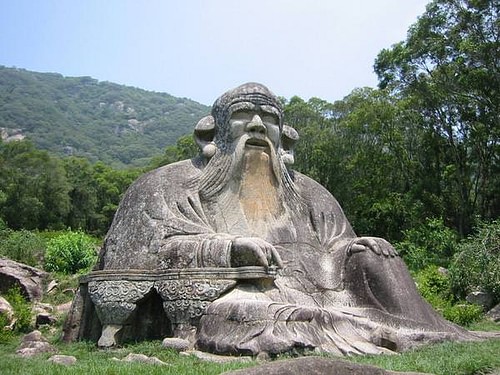
In the second episode, we looked at two stories from Taoism. Taoism asks you to disregard the distractions of this world and believe in what you can learn by striving for oneness with the Tao.
In this final chapter, we will talk about taking things at face value. Many Christians do this with the Bible and call it “Biblical Inerrancy.” The term Biblical Inerrancy comes with quite a bit of baggage that I am not looking to dissect. I am using the take on the Bible of Inerrantists for a certain point and not to go on a long discourse on its validity.
(more…)