Tag: bible

  • 2.02 Introduction – The Annunciation

    2.02 Introduction – The Annunciation

    Luke 1:26-38

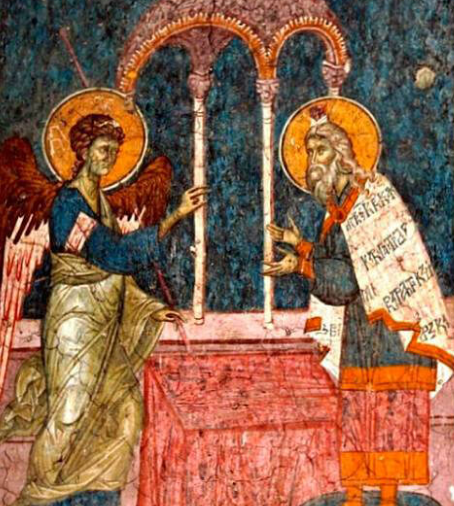
    This essay is part of a series that follows the four Gospels chronologically, based on Aland’s Synopsis of the Four Gospels, using the NASB 2020 Bible translation. It covers Luke 1:26-38, an account commonly known as “The Annunciation.”

    Luke positions this story as a parallel to the announcement of Elizabeth’s pregnancy with her son, John the Baptist. The two scenes share a messenger, a greeting formula, a note of fear, a promise of a son, a question, and an answer. The parallels are close enough that the differences between them carry as much weight as the similarities. A second pattern runs alongside them: at several points Luke’s theological aims sit in visible tension with the incidental details of his narrative, and those seams prove as revealing as the smooth joins.

    (more…)
  • 2.01 Introduction: The Promise of the Birth of John the Baptist

    2.01 Introduction: The Promise of the Birth of John the Baptist

    Luke 1:5-25

    This essay follows the order of Aland’s Synopsis of the Four Gospels and uses the NASB 2020 translation. It focuses on Luke 1:5-25, the account of Zechariah’s encounter with the angel Gabriel in the Jerusalem temple.

    Drawing on Old Testament themes such as prenatal consecrations, a barren matriarch, and Malachi’s prophecy of Elijah’s return, the account presents John as the consecrated forerunner who will “prepare the way” for the Messiah. This story opens Luke’s Infancy Narratives, the birth accounts that begin his Gospel. Raymond Brown’s The Birth of the Messiah remains the primary critical study of this material, including Matthew’s parallel infancy account. Specifically, Luke uniquely tells the story of John’s conception and birth, while Mark starts with John already an adult at the Jordan, just before baptizing Jesus.

    This essay argues that Zechariah and Elizabeth cannot be read apart from the Old Testament and that Luke’s interest in them is primarily symbolic rather than biographical: nearly every detail he selects presents their son as the consecrated forerunner, set apart before birth to prepare a people for the Lord.

    (more…)
  • 1.03 Preface – The Gospel Names

    1.03 Preface – The Gospel Names

    To conclude this section on the Prefaces to the four Gospels, I will review what we know about their authors and the attributions traditionally linked to them. None of the four Gospels names its author. They circulated anonymously; the names we now use were assigned later by tradition, not by the writers themselves. This chapter argues that these names functioned less as bylines than as claims to authority, each meant to tie a Gospel to the apostolic generation; and that where a name belongs to a minor figure rather than an apostle, that very modesty is better read as the memory of a real contributor than as an invented pedigree.

    Papias of Hierapolis (60–130 CE) is the earliest Christian writer known to have linked the Gospels to their traditional authors. He stated that he collected oral traditions from “elders” who knew the apostles. A fragment of Papias’s work preserved by Eusebius says that “Matthew wrote the logia in Hebrew, and each one interpreted them as they understood” (Ecclesiastical History 3.39.16). While the meaning of “logia” is debated, it most likely refers to a now-lost collection of Jesus’s sayings rather than the completed Greek Gospel. I will discuss this further in the section on Matthew.

    Modern scholars approach Papias with caution. Eusebius, who preserved much of his work, referred to him as “a man of very small intelligence” (Ecclesiastical History 3.39.13). The tradition Papias recounts, elders who had known and heard the apostles, is hard to confirm, since more than a generation separated the apostles from Papias’s claim of contact with those who knew them.

    It remains uncertain whether Papias’s assertions are genuine, exaggerated, or completely fabricated. However, later figures, notably Irenaeus of Lyon (c. 125–202 CE), adopted his attributions. Irenaeus was the first to clearly identify the four canonical Gospels as Matthew, Mark, Luke, and John (Against Heresies, c. 180 CE). This fourfold naming became the norm by the late second and early third centuries, mainly thanks to Irenaeus and other later writers.

    (more…)
  • 1.02: Preface– The Prologue to John

    1.02: Preface– The Prologue to John

    John 1:1-18

    This essay is the second in a series that follows the four Gospels chronologically, based on Aland’s Synopsis of the Four Gospels, using the NASB 2020 translation.

    John’s Prologue combines Greek and Jewish ideas of the Logos to describe Jesus before the incarnation. It conveys a higher Christology than the other Gospels, highlighting Jesus’s divinity rather than His humanity. By omitting the birth and the genealogy, John shifts the focus from Jesus’s human origin to His divine one, centering on the Logos, which has existed with God since “the beginning” (John 1:1-2) and became flesh as Jesus to make God known.

    Two primary ideas shape this reading. First, John’s high Christology is not a departure from Jewish ideas but an expansion: the notions of the Word, Wisdom, and glory, long represented in Israel’s scriptures, are extended to depict a man who lived. Second, opening with a “beginning” rather than a “birth” suggests that John engages the origin stories of Matthew and Luke while quietly setting them aside.

    (more…)
  • 1.01 Preface – The Prologues to Mark, Matthew, and Luke

    1.01 Preface – The Prologues to Mark, Matthew, and Luke

    Mark 1:1, Matthew 1:1, and Luke 1:1–4

    This essay is the first in a series that follows the four Gospels chronologically, using Aland’s Synopsis of the Four Gospels and the NASB 2020 translation.

    Mark’s Gospel explicitly states its purpose: to prove that Jesus is the Christ and the Son of God. Matthew focuses on Jewish history and prophecy to demonstrate how Jesus fulfills messianic hopes. Luke bases his account on detailed investigation, using earlier written sources and eyewitness testimonies. These are not three versions of one preface but three different arguments about how to introduce Jesus, and that difference, more than the events each writer narrates, is the thread this series will follow.

    (more…)
  • Charlie and the Good Samaritan

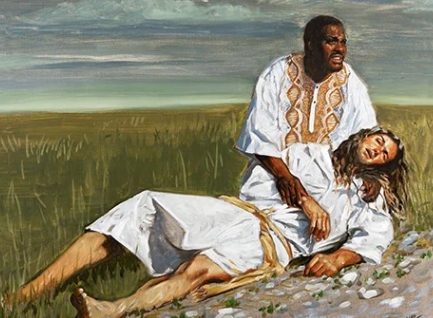
    Charlie and the Good Samaritan

    https://embed.acast.com/661db71717216800165394bf/68c4ac3986eb67a6f63f4900

    Fox News Host Jessie Watters: “Everybody’s accountable and we’re watching what they’re saying on television and who’s saying what,” Watters said, naming “the politicians, the media, and all these rats out there.”

    In 1942, Fritz Hippler made the film “The Eternal Jew” as Nazi propaganda. The film compares Jews to rats that carry contagion, flood the continent, and devour precious resources.

    Luke 6:27-29: 27 ‘But to you who are listening I say: Love your enemies, do good to those who hate you, 28 bless those who curse you, pray for those who mistreat you…’”

    Charlie Kirk, August 21st, 2025: “President Trump is going out on patrol tonight in <Washington> DC. Shock and awe. Force. We are taking our country back from these cockroaches. <It is> Just the start.”

    In 1927, the Nazi newspaper Der Sturmer ran a cover article with an image of Jewish rats being gassed under a tree. The quote under the picture read, “When the vermin are dead, the German oak will flourish once more…”

    Luke 6:45: 45 A good man brings good things out of the good stored up in his heart, and an evil man brings evil things out of the evil stored up in his heart. For the mouth speaks what the heart is full of.”

    (more…)