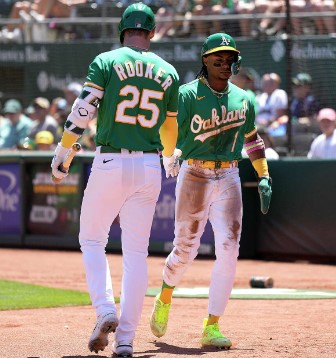
The Athletics will play their final home game in Oakland on September 26th, 2024. They have called Oakland home since 1968. They are leaving Oakland after a prolonged financial battle between owner John Fisher and the city of Oakland over the cost of a new ballpark.
John Fisher is a multi-billionaire whose parents founded The Gap. He ran a failed construction company and then took over his family’s wealth management company but has no personal successes as a businessman to his credit. His dad helped him finance partial ownership of the San Francisco Giants baseball team to keep them from relocating. Eventually, Fisher sold those interests, and his parents helped him buy the Oakland Athletics in 2005.
Fisher’s teams have finished as one of the worst in baseball in about half of the seasons since Fisher took over the team. Most fans and pundits regard him as one of the worst owners in all of American professional sports:
From the Sports Business Journal: “There is “precedent in baseball” for “removing a disgraceful owner.” The problem in Fisher’s case is that “his incompetence doesn’t affect the other owners.” If he “embraces crazy politics, embraces relocation or fields an inexcusably terrible product, he’s hardly the first.” But Fisher’s “crime is a savage blow to humanity.” He “intentionally let the Oakland Coliseum rot into a wasteland and cleared his roster of stardom for the specific purpose of driving away fans.” In his “twisted mind, a near-empty stadium would allow him to say, ‘See? This is why we can’t play here.’” https://www.sportsbusinessjournal.com/Daily/Issues/2023/06/05/Franchises/mlb-waives-oakland-athletics-relocation-fee-las-vegas.aspx
Since taking over the A’s, Fisher has been battling with the city for a new stadium. His threat was that if the taxpayers didn’t pay for all of it, then he would take his team and move to a new city. Though he is a multi-billionaire, he has made it clear that he does not feel he should have to pay for anything, even though a critical part of his demands is that he gets all profits and benefits from the stadium once it is built. His lease with the stadium in Oakland expires at the end of 2024, which allows him to leave before the 2025 season. Oakland voters rejected his demands, so Fisher plans to move the A’s to Las Vegas.
Fisher is still working with the city of Las Vegas to finalize plans to move the team there. In the meantime, the A’s will play their home games in a minor league park in Sacramento, California, for the next 3 or 4 years. Fisher demands that Las Vegas taxpayers cover about 30% of the cost of his stadium, and he wants outside investors to pay for the rest. Again, Fisher is determined to build a wildly profitable stadium using anyone’s money except his own.
While Las Vegas has approved the taxpayer funding, they won’t move forward with the project until Fisher provides a clear financial plan showing how he or investors will cover the remaining 70% of the project. Fisher is supposed to provide his plan to the city in October 2024.
Baseball teams require a 75% vote from the other teams to relocate. In addition, owners usually have to pay a steep fee to the league as part of relocation. The league approved the move and waived Fisher’s fee for moving the A’s to Las Vegas. Many pundits have speculated that the other owners in baseball were keen to approve the A’s move because they want to use it as a threat to their cities to secure new stadiums, renovations, or other benefits through tax-payer funding. Baseball teams are owned mainly by billionaires who believe cities should pay for having them and their teams in their cities.
John Fisher is just one of 30 owners, most of whom are as toxic as he is. I am a lifelong baseball fan, but I think it is incumbent on all of us to tell these owners we would rather see them go than hand over our money so they can get even richer.
The “Athletics” name began as a short-hand term for teams in early leagues in the 1830s and 40s. Philadelphia’s first professional baseball team was the “Philadelphia Athletic Baseball Club.” That is a bit of a mouthful, so when local Philly papers started covering the team, they called them the Athletics.
The National Association of Professional Baseball Players, usually called the NA, was the first professional baseball league. It lasted from 1871 to 1875 and was dominated by the Boston franchise.
Over its five seasons, 23 different teams have played in the league. Only three Teams, Boston, Philadelphia, and the New York Mutuals played in all five seasons. Eleven teams played in only one season, and another four teams played in only two of the five seasons. The league routinely lost money, gamblers were prevalent, and the Boston franchise dominated the league to such a degree as to make it non-competitive.
The Boston franchise was known as the Red Sox. Confusingly, this is not the Red Sox franchise in Boston that is still around. This Boston Franchise changed its name from Red Sox to Bean Eaters for a while. Eventually, they changed their name to the Braves. The Braves would move to Milwaukee and then eventually to Atlanta, where they are still around as the Atlanta Braves.
The New York Mutuals of the NA was a ball club owned by Boss Tweed of Tammany Hall infamy. Tweed was one of the biggest landowners in New York. He owned a bank and a railroad and was part of the group that funded building the Brooklyn Bridge. He also had an iron grip on politics in New York and used his power to pick winners and losers in New York elections.
In 1871, he was arrested on fraud and corruption charges for stealing at least 45 million dollars from the state. After his arrest, he used his influence to get elected to a state senate seat. He would spend the next seven years in legal battles but would eventually be convicted. When his legal troubles started, he walked away from the New York Mutuals and left them to Bill Cammeyer, who seems to have been a legit businessman who spent his fortune on baseball. Cammeyer invented the enclosed baseball stadium with the building of the Union Grounds in 1868.
The Philadelphia Athletics played in all 5 NA seasons as well. In 1876, the Chicago team, known as the White Stockings, moved to improve their team and the league. The result was the collapse of the NA and the formation of a more professional league known as the National League. The Philadelphia Athletics were admitted to this league but ran out of money by mid-season and refused to travel. Instead, they opted to play in local games in Philadelphia to raise money to pay their bills. The National League expelled them at the end of the 1876 season, and this first franchise went defunct.
In 1882, a new Philadelphia Athletics franchise was started as part of a league called the American Association. By 1882, the National League was established. The AA played an early version of a World Series with a post-season series against the National League champion. The two leagues differed; the AA played on Sundays, served alcohol at games, and allowed franchises in “River Cities” like St Louis and Louisville. The AA was nicknamed the “Beer and Whiskey League”. The NL and AA would meet four times for a World Series. The NL won 4 out of 5.
The AA lasted until 1891 and was undone by the National League, which kept stealing the best players and teams. The National League owners had formed a secret deal not to steal each other’s players. This was known as the Reserve Clause and is a form of anti-trust or collusion that was probably illegal. However, this Reserve Clause agreement did not extend to the AA. Since the NL had more money and was more established, they could eat away at the AA until it stopped functioning after the 1891 season. This Philadelphia Athletics team disbanded like the one before it.
In 1901, the Western League renamed itself the American League. The Western League had several successful franchises and decided it could compete with the National League. Ban Johnson was the president and took on the project to make the league equal to the National League. The Western League of the 1890s contained modern franchises such as the Chicago White Sox, Minnesota Twins, Detroit Tigers, Baltimore Orioles, and Cleveland Guardians.
As the league was preparing to begin its first season, Johnson believed having teams competing in key National League cities was crucial. One such city was Philadelphia. Johnson convinced a friend named Connie Mack to manage this new team. In the 1870s, the cost of starting a baseball club skyrocketed. In the early days of the National League, a team could be stood up for a few hundred dollars.
By 1901, the cost was about 100,000 dollars. Mack had about 25% of that but needed other people to invest with him. He convinced the partial owners of the Philadelphia Phillies to join him in this new venture. Those owners were the Shibe family. Ben Shibe was the primary owner of the A’s and would also be the namesake of his park for the team: Shibe Park.
Shibe Park was baseball’s first steel and concrete stadium. In 1909, it held about 23,000 people. It remained in use in Philadelphia until 1970 and, at its peak, could hold about 34,000 people. Shibe Park has a messy history. The park’s owners fought with neighbors who moved dimensions around, and the park ended with a riot in which fans ripped the place to pieces for souvenirs.
However, Connie Mack was the actual owner of the athletics team in Philadelphia. This A’s franchise would remain in Philadelphia until 1954 when Mack was the manager and owner of the team for almost the whole era (his sons forced him out after the 1950 season).
In 1954, the Philadelphia A’s finished as one of the worst teams in baseball history. Poor attendance descended to almost no attendance, and the Mack family found they could not pay their bills on the franchise. The Mack family put the A’s up for sale to avoid bankruptcy and found a willing buyer in Arnold Johnson.
Arnold Johnson was a real Estate businessman in New York. In the late 1940s and early 1950s, he made a series of transactions that culminated in owning Yankee Stadium, where the New York Yankees played, and the Kansas City Blues Stadium in Kansas City.
When Johnson purchased the A’s, he announced plans to move them from Philadelphia to Kansas City. The Kansas City Blues were the minor league affiliate of the New York Yankees, so he could not make this move unless the Yankees waived their rights to Kansas City and volunteered to move their minor league franchise to another city. This was very costly to the Yankees, and they had the right, through Major League rules, to either veto Johnson’s planned move or demand a high payment to aid their relocation costs. Curiously, the Yankees agreed to move their KC minor league team to Denver and waived their rights to KC. Johnson was able to move the A’s to KC right away.
Johnson sold his stake in Yankee Stadium, but this deal was shady and may not have divested Johnson’s interest in the Yankees. During Johnson’s tenure as owner, the KC Athletics functioned as little more than a Yankees feeder squad. The A’s would often trade their best players to the Yankees in exchange for injured or broken-down players on the Yankees. It was a barely hidden secret that the KC A’s were in the tank for the Yankees under Johnson.
Johnson may have had a 2nd plan to make money on the A’s. He sold the KC Stadium to the city of KC before the 1954 season and agreed to a lease deal with them. The deal had an escape clause for the team, which they could void and move if attendance dropped below one million people. It seems that Johnson’s real plan was to tank the team, get attendance low so he could void the lease, and then move to Los Angeles, where there was real money to be made. Unfortunately for him, the Brooklyn Dodgers beat him to the punch and moved to LA before he could. The result was that Johnson and his team were stuck in KC with nowhere to go.
The Yankee-A’s relationship came to an abrupt end when Johnson dropped dead from a stroke in 1960, just six years after moving the team to KC. This cleared the way for Charlie Finley to buy the team. Finley lost out on the bid for the A’s in 1954 because the Yankees pushed for the sale to Johnson; we wonder why. He then lost bids on the Tigers, White Sox, and Angels over the next five years. Finley bought up Johnson’s controlling interest in the A’s and then bought out all other minority owners within a year.
Finley is a now familiar rich guy who resembles Elon Musk-type characters. He does things on a whim, makes jokes out of serious matters, and is aggressively determined to do it his way. He changed the A’s colors from blue and white to green and gold. He changed their mascot from an elephant to a donkey. He changed the way they scouted and recruited players. He fought with other owners and made fun of the league’s rules.
Finley promised to keep the team in Kansas City during his eight years there. Still, he bid to move the team to Louisville, Dallas, Atlanta, Milwaukee, New Orleans, San Diego, Seattle, and Oakland over his eight seasons as the owner in Kansas City. He was so desperate to leave Kansas City that he threatened to move the team to “a cow pasture in Peculiar, Missouri.”
His final lease with Kansas City expired at the end of the 1967 season, and the league approved his bid to move to Oakland. Under Finley, the Oakland Athletics were one of the most dominant teams in baseball. His radical ideas on player evaluation led him to have one of the best teams in the sport. They won 3 straight World Series titles in 1972, 73, and 74. But after 1974, the team became too expensive to hold together, and Oakland was not a big enough market to help him afford his star-laden squad.
Finley lost his all-star team to free agency and sold off players to other teams to meet cost demands. By 1980, he was ready to sell the team. He found a buyer in Marvin Davis, an oil magnate who owned 20th Century Fox for a time. The city of Oakland blocked their deal because the Raiders abruptly moved to Los Angeles, and the city did not want to lose both of its major pro teams in the same year. Finley changed course and sold the team to the President of the Levi Strauss company, Walter Haas, who agreed to keep the team in Oakland. From 1980 to 2005, ownership was pretty stable. The A’s were a good franchise with regular on-field success and ownership invested in the team and the city.
In 2005, John Fisher bought a controlling interest in the team. He seems to have spent a decade hoping to get a deal from Oakland to keep the team there. But since 2016, he has intentionally tried to tank the team, make the ballpark unappealing, and generally make the situation between the team, the city, and the fans so untenable that the A’s have no choice but to leave.
Oakland, which in 1980 seemed determined to hang on to the A’s, now seems lukewarm about it. The city had a long fight with the Raiders and their owner, Al Davis, which may have contributed to the indifference. Davis moved the Raiders to Los Angeles in the early 1980s, then back to Oakland, then back to LA, then back to Oakland. Now, the Raiders are in Las Vegas, where the A’s are headed.
Since 1901, 13 baseball teams have moved from one city to another. Three of those moves will be by the A’s franchise. It is fascinating that of the 30 franchises, one team accounts for 25% of all the moves. And the A’s seem to have a knack for finding eccentric owners, such as Johnson, Finley, and now Fisher, who are all obsessed with escaping where they are to get somewhere else.
 More Important Things
Leave a comment