The idea for this episode started while my wife and I were walking our dogs. My wife often asks questions about how something works based on something she saw online. By the time she is asking me about it; it may have been days or weeks since she saw the video and so the question she is asking me may not be what the video was originally about. Often she combines a couple ideas in to one thing. In this case her question was why Elon Musk was saying that soon the only way to buy a house was going to be with Bitcoin. I can’t find anywhere where he said that. But I did find recent quotes where he was whining about the National Debt and how the American dollar was going to collapse soon. So I’m going to assume that plus a video about people buying a house with Bitcoin combined in to her question.
My goal is to pull apart her question in to what I think were the three original things she saw and try to address them. The three questions in this episode are:
- “Is America’s national debt about to ruin the country?”
- “What is money?”
- “Can you buy a house with Bitcoin?”
As always my goal is not to provide definitive answers. There is a lot more depth to each of these beyond what I cover here. I hope that at the end of this episode you are as confused as ever, but on a higher level and about more important things.
In May, 2024 The US National Debt passed $34 Trillion dollars. That sounds like a lot of money and yet there are many economists who would tell you that the deficit is not nearly big enough. Some would go so far as to say the US debt doesn’t matter at all and we should never worry about it no matter how big it gets. I’m not going to go in to all that, but I do think it is enough to know that whenever someone starts talking about how America is about to collapse because of the debt; you should know that that person has just announced to you that they don’t actually know anything.
A quick breakdown of our debt:
About 20%, or 7 Trillion dollars, of the debt is for internal government programs. These are programs like Social Security, Veterans and Military Personnel programs, and the Affordable Care Act. The money the government borrows from itself to pay for these programs are paid for by selling bonds, recovered through taxes, and paid for by profit-generating activities of the US Treasury. This appears as debt but is all part of 5 and 10 year repayment plans that turn this in to recovered debt in the future.
About 30%, or $11 trillion dollars, of the debt is owned by the government (mainly the US Treasury) as a way to incentivize spending and activity. Since 2008 this category of debt mostly comes from a thing called “Quantitative Easing” or “QE”. QE is a nerdy concept that theoretically goes back thousands of years. The US government enacted QE programs as a recovery method to buy back government backed debts from other players in the market. It is designed to stimulate economic activity when inflation low. Normally a government would play with things like interest rates to impact inflation. Once inflation is low the government can no longer do this so it turns to QE as an alternate strategy to manipulate the market in positive ways. QE increases debt; but theoretically the debts owned by the US Treasury can be sold or repurposed to turn a profit. In the long run, the theory goes, the US Treasury can use profits from QE acquired debt to pay down the national debt in the future.
The remaining debt, about $16 Trillion dollars, is US Bonds owned by foreign countries like China, Japan, European Union countries, and so on. This debt is also owned by large domestic entities like Mutual Funds ($5 trillion), Depository Institutions ($3 Trillion) and State & Local Governments (also about $3 trillion). All of these entities have reasons for carrying US debt. So long as the US is on top of the world’s economic system these entities will continue to want to own US debt. So long as this is true the US Debt is not a big deal. If the circumstance were to change and no one foreign or domestic wanted to own US Bonds then the deficit would become an issue.
The US has carried a deficit for 20 years in a row. Nations operating at a deficit are not a big deal. France, England, China, the US, and most other large nations regularly operate at a deficit. Not every country can operate with a deficit. But countries who have enough power in the global market can. The US is far-and-away the most powerful economic country in the world. The result is that we can operate with extreme latitude on our budget because we have the biggest economy, because the US Dollar is the currency of standard exchange, because buying and selling oil is done in USD, and because the US Treasury is the bank of last resort for any global calamity.
One final note on the deficit. China has been a very large holder of US debt in the 2000’s. There are a bunch of reasons for them to do this. One of those reasons is that the US Central Bank is the bank of last resort. What that means is that the US Central Bank is who you go to when all-else has failed. We have bailed out other countries numerous times over the past 80 years. It is not ideal for those countries to have a foreign entity be their backstop. But is a great deal for the US. China and America have an antagonistic relationship and so one reason China would want to own substantial amounts of US Debt is because it gives them leverage. If they needed the US Treasury’s help, as a last resort measure, it would tempting for the US to take a hostile stance and refuse to help. China could then call on the US Treasury for cashing out the debt it owns and make things very hard for the US. China has reduced its debt holdings in recent years in accordance with its ability to develop other contingency, or last resort, plans to handle a major catastrophe.
The point of all this is not to make anyone an expert on debt. It’s just to show that the US National Debt is super-complicated. There are a lot of reasons it exists; many of those reasons are actually positive for us as Americans. It is not a smart plan to reduce the debt for its own sake. It may actually be a smart plan for Americans to increase the debt, not reduce it.
Ok. So after that tangent on the US Debt let’s move to money actually is. When you think about money you picture dollar bills, your credit or debit card, or maybe just a buy-now link on an Amazon auction. But why do you, and the person you’re buying from on Amazon, both agree that what you are giving them for their product is valuable?
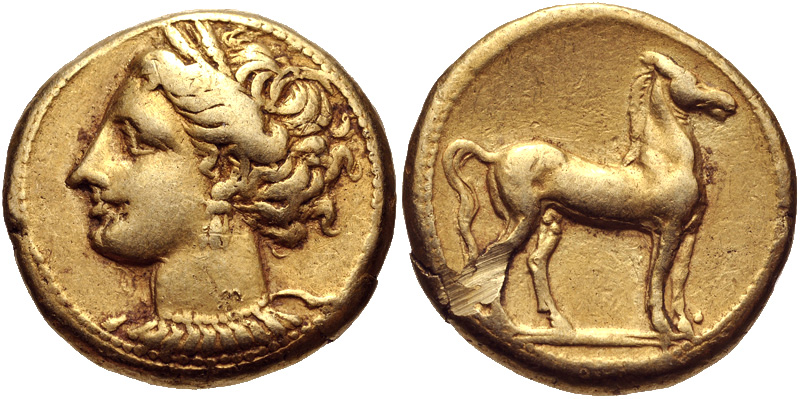
The oldest money in the world that we know of was the Mesopotamian Shekel. The Shekel appears around the year 2,500 BCE. Mesopotamia is the name for the area between the Tigris and Euphrates rivers. Today we know this area as Iraq.
Imagine you own a big farm in 2,500 BCE. You have a bunch of land to work and you need a ton of workers to get it done. These workers are probably slaves. You hear about a slave owner who will be in the nearest town to you and he has a bunch of slaves to sell. You want to give him some tonnage of barley in exchange for 20 workers. To make this deal work you have to bring tons of barley to town, he has to bring 20 slaves to town. You have to swap and head back your separate ways. Transporting all these goods is a lot of work for both of you and there are risks of robbery, slaves escaping, and other logistics just to get together. There has to be a better way!
The Shekel comes about as a solution. You both could come to town and meet to discuss terms of the trade. Carrying a pouch of Shekels is much easier than dragging 20 slaves or a ton of barley. It makes a lot of sense, as people in the ancient world started to have large quantities of valuables, to create something small, like a coin, that could represent that value.
The Shekel was initially backed by tangible things like stores of barley. Eventually that became difficult. Barley is not constant and so the coins you possessed were not of a stable value. Weird incentives emerge too. If a lot of barley gets produced then the value of a Shekel would drop. It is not good to have a currency that encourages starving. By around 1,000 BCE a middle step had emerged. Currency became tied to precious metals instead of the products themselves. This begins the Silver Standard.
Gold, Silver, and Bronze are interesting metals because they are fairly scarce, but are pretty evenly distributed around the world. They’re not like oil, for example, where a country like Saudi Arabia can just endlessly pull it out of the ground. The effect is that no one can monopolize the value and they can’t rapidly deflate because one country can just drop a ‘gold bomb’ on the world.
Ancient coins were made of these precious metals (Gold, Silver, Bronze) and so were valuable by weight where value of each metal coin would be fixed by the local government. For this to work all of the countries had to agree that gold, silver, and bronze were valuable. They did not have to agree on the values. As a merchant you would take your goods somewhere for sale and understand that rates in that place may be different. Over time values tended to normalize because if you were a country that didn’t pay then you were a country that didn’t get goods coming in.
At this point the question of what money can be pretty easily answered. Money is a token that represents something of value. The value was direct: Coins equal store of tangible goods. Later a step was added to normalize the value. After that precious metals represent value but are still basically a stand-in for the value of tangible goods. In other words, a fixed amount of silver is worth x dollars. And it takes x dollars to buy y amount of barley.
And for the most part that understanding of money holds for a long time. Our idea of money really doesn’t change until the 20th century. There are some things going on that are worth mentioning. Like China uses money that isn’t tied to precious metals at times, but they always go back. China also invented paper money sometime before 1,000 AD. Europe begins using paper money in the 1600’s.
Paper money represented value in the form of notes. The big difference between coins and paper is that the coins were minted from precious metals and so had value of their own. Paper adds a step in that you have to take the paper to someone who has the value the paper describes or who also agrees that the paper is worth what is written on it.
Even with paper, and other currencies like the Dutch Tulip of the 1630’s coming and going, the Silver Standard was the most common currency in the world from about 1,000 BCE all the way to the late 1800s. The silver standard would express values primarily in Silver and then also express Gold and Bronze values as a conversion to silver. For example, the British Pound Sterling (still a term of use today) describes a coin that is 1/240th of a pound of silver.
The Gold Standard emerged in the 1660’s when Great Britain discovered a massive cache of gold in a place they called Guinea, today this is Ghana in Africa. Britain began producing gold coins, called Guineas, and made it the standard of their empire.
The rest of the world did not follow Britain to the gold standard until the 1870s when Prussia soundly defeated France in the Franco-Prussian War. After this war Prussia and its neighbors united and became Germany. Germany extracted a massive payment from France in exchange for abandoning German occupation of France. With a war chest of French Gold the new German nation thought a good way to declare itself a global super power would be to move to the Gold Standard along with Great Britain.
The switched to the Gold Standard in 1873. The Coinage Act of 1873 came to be one of the biggest scandals in US history. Prior to 1873 US citizens could trade in gold and silver. This was known as “Bimetallism”. At the time gold was seen as the metal of the elites and silver was the metal of the common person. The Coinage Act of 1873, often referred to as “The Crime of ‘73” made it so that silver stopped being a tradeable commodity.
Over the next twenty years in US politics the fight over silver grew to a fever pitch. In 1896 William Jennings Bryan of Nebraska became the Democratic nominee for President. He rode a wave of Silver fervor to the nomination and carried electoral votes of the South and Midwest. He lost the presidency but I think it is worth hearing his words on what was going on at the time to understand the pain people felt in the transition from Silver to Gold:
First a quote from the 1896 Democratic Party Platform: “We demand the free and unlimited coinage of both silver and gold at the present legal ratio of 16 to 1 without waiting for the aid or consent of any other nation. We demand that the standard silver dollar shall be a full legal tender, equally with gold, for all debts, public and private, and we favor such legislation as will prevent for the future the demonitization of any kind of legal tender by private contract.”
And now quotes from William Jennings Bryan’s “Cross of Gold” Speech: “We say in our platform that we believe that the right to coin money and issue money is a function of government. We believe it. We believe it is a part of sovereignty and can no more with safety be delegated to private individuals than can the power to make penal statutes or levy laws for taxation.
“Let me call attention to two or three great things. The gentleman from New York says that he will propose an amendment providing that this change in our law shall not affect contracts which, according to the present laws, are made payable in gold. But if he means to say that we cannot change our monetary system without protecting those who have loaned money before the change was made, I want to ask him where, in law or in morals, he can find authority for not protecting the debtors when the act of 1873 was passed when he now insists that we must protect the creditor. He says he also wants to amend this platform so as to provide that if we fail to maintain the parity within a year that we will then suspend the coinage of silver. We reply that when we advocate a thing which we believe will be successful we are not compelled to raise a doubt as to our own sincerity by trying to show what we will do if we are wrong.”
End quote, quote continues:
“If they dare to come out in the open field and defend the gold standard as a good thing, we shall fight them to the uttermost, having behind us the producing masses of the nation and the world. Having behind us the commercial interests and the laboring interests and all the toiling masses, we shall answer their demands for a gold standard by saying to them, you shall not press down upon the brow of labor this crown of thorns. You shall not crucify mankind upon a cross of gold.”
As you can hear in Bryan’s words the fight was deadly serious at the time. But world events were soon going to sweep away the problem in America. World War 1 started in 1914. The cost to the European countries involved was devastating in terms of lives, infrastructure, and also in terms of the pure amount of money it took to conduct the war.
When World War 1 ended England and France owed the United States way more money than they could repay. France also still held a grudge for the extortion that took place back in the 1870s at the end of the Franco-Prussian war. As a result France and England levied a huge repayment burden on Germany. Germany, like France and England was in no position to cover these debts. Eventually this debt crisis in Europe was a major contributor to the Great Depression. The Great Depression facilitated the rise of fascists in Spain, Italy, and Germany. Those fascists eventually kicked off World War 2.
When the Allies realized that victory was in hand in World War 2 they sent their best and brightest economists to a conference to try to create a post-war system that would produce a better outcome than what happened after World War 1. This is known as the Bretton Woods Agreement.
As a result of the two world wars of the 20th century America had found itself as the preeminent global financial super power. It had not sustained war damage to its infrastructure, it had not suffered the loss of human life that Europe had, and the US had accumulated over 60% of the world’s gold in to its reserves.
That last one, about the gold reserves, is very important. At Bretton Woods the Allies decided that America would stay on the gold standard and become the primary global currency. The other countries would move to a thing call ‘fiat currency’ which would be possible since America could be the back stop for the global economy. This system was in place when the war ended. Bretton Woods created a structure called the International Monetary Fund (IMF) to regulate all of this.
The Axis powers (Germany, Italy, and Japan) all joined the Bretton Woods system as part of their recovery from defeat. The first hole in this system emerged at the end of the war too, though, which was that the Soviet Union backed out because they did not want to have to rely on the US to support their economy. The Soviet Union backing out created an alternative path for countries to not have to rely on the US. Countries like China went with the Soviets instead of the Western nations and the IMF.
I need to talk about Fiat Currency for a minute but first we should finish the Bretton Woods story.
By the 1960s, less than 20 years after Bretton Woods was put in place, it had become clear that America could not support the global financial markets and remain on the Gold Standard. It was too restrictive and put America in a position where it had to tell countries what they could and could not do with their economies. Countries weren’t going to listen but would still expect America to save them if things went wrong.
In 1971 President Richard Nixon suspended Bretton Woods and the Gold Standard. Less than 18 months later America formally ended its Gold Standard practice and joined its partner nations as a Fiat Currency. Bretton Woods was formally ended in 1976 through the Jamaica Accords.
Ok so by 1972 all of the Western Countries have gone from Silver Standard, to Gold Standard, to Fiat Currency. But what is Fiat Currency?
Fiat currency is a system where money is issued with no commodity backing it. That is a country issues money based on faith in the government alone, not on its silver or gold reserves. Our modern version of pure global fiat currency has only been in effect for about 50 years. The 30 years of Fiat currencies before that used America’s gold standard as a proxy way to keep currencies around the world tied to something tangible.
Fiat Currency is not a new idea. China has gone back and forth between silver standard and fiat currency a few times over the past 1,000 or so years. While the current use of Fiat Currency seems to be strong it should be noted that all previous historical uses of it have eventually failed and required the places using Fiat Currency to return to a commodity backed currency. It remains to be seen how long Fiat Currency will last this time. China had longer periods of fiat currency that eventually collapsed than the duration we are currently in today.
The challenge to fiat currency is that it requires everyone using that currency to believe in its value. If the belief system breaks, for whatever reason, then the value can vanish. If the belief breaks there is no commodity beyond the government so there is nothing to collect.
I think it is important to remember that a currency based on precious metals is somewhat imaginary as well. What I mean is that if you place value on something like a storage of grains, for example, then there is a tangible product that people can use backing your currency. You cannot eat or drink gold. You cannot build a house out of gold. Gold is precious because it is scarce and, frankly, because humans are silly creatures who like shiny things. If you base your economy on gold as a scarce metal then the value is only real in-so-far-as other people agree that gold is worth something.
In America we stopped putting gold in to our coins in 1933. We removed silver in 1965. Today coins are made of basic materials and the coins don’t have any precious metal value of their own. Our coins are an accurate representation of the financial system. A quarter has value because you, and the person you give it to, both agree that it does.
After describing the Silver and Gold Standards I went back to the “What is Money” question. In a Fiat Currency world the question of what money is gets harder. Money is a system of faith where we all agree that a dollar is a thing even though it isn’t backed by anything. So long as the faith holds, the currency value holds. If the faith breaks there is nothing to fall back on, like gold or silver, to restore the faith.
Modern Monetary Theory:
A basic problem of fiat currency is that is not tied to anything tangible in the real world. If I live in a gold standard country where there is a fixed rate for ounce of gold to cash value then I know what my money and my gold is worth. Put simply, if one pound of gold is worth one-hundred dollars then, if I find a one pound gold ingot I can go to the government and trade in my gold for one-hundred dollars.
If a country on the gold standard prints 100 million dollars in bills then it should have the same amount in reserves of gold. This is over-simplified, gets more complicated in bimetallic systems, and also doesn’t account for the fact that the gold standard wasn’t purely about gold-to-currency but was actually about a country’s central bank having some standard to work off of in its dealings with other nation’s central banks. Over the past 300 to 400 years there have been financial collapses, depressions, recessions, bank-runs, etc; many of those occurred during the silver and gold standard eras which shows that having a fixed system did not solve all problems.
Even still, the basic idea is that if there is 100 dollar bills total in circulation and I have one of those dollar bills then my worth is 1/100 or 0.01 of the total dollars in circulation. If the government prints ten more dollar bills then my one dollar is now worth 1/110 or 0.009. My wealth went down because the government printed more money. In a commodity system like the Gold Standard the government can only print more money if it acquires more gold which means that while the number of bills went up by 10 the worth of the system also went up equally. Theoretically on the gold standard when the bills increase by 10 your one dollar bill is worth the same proportionally because the core value can’t actually change.
But in a fiat currency system the value is separated from the volume… to a point. If confidence is high then the US can go from 100 to 110 dollars without any dollar losing its singular value. This is highly debatable. If you have wealth then an increase in dollars decreases your worth relative to others but your spending power in a single purchase is the same.
At some point a country cannot keep printing money in a fiat system. Over-producing currency will eventually crash confidence and destroy the value of the money. Or will it? Modern Monetary Theory, or MMT, says that a country can more aggressively pull levers (increase taxes, sell more bonds, etc) to keep printing money and head off inflation. I think the basic point of MMT is that countries should not worry about their deficit. Instead they should push/pull based on needs of the people. Government should spend and lower taxes when there is a need to juice the economy. Then if the value of the dollar dips you raise taxes, and pull back spending to re-balance.
People like Bernie Sanders, Alexandria Ocasio-Cortez, and Elizabeth Warren have all spoken in favor of MMT policies. Depending on what you think of them probably determines what you think of MMT.
MMT says that money is a mechanism by which the government can make its people’s lives better. That is the MMT answer to “What is Money.” It’s really abstract and far away from the beginning where money was a coin that represented the value of what you had at home.
Cryptocurrency:
Starting in 1960 how we spend money started to change too. There were thousands of years where coins made of precious metal was about all there was. Paper money was a huge advance by the 1600s that held for 300 years as well. But in 1960 Credit Card started being used. That innovation was as big as the coin or paper money but it’s time alone on stage was only about 35 years. In the mid-1990’s online payment systems like PayPal emerged. Online payments took center stage for only about 15 years.
In 2007 a person calling themselves “Satoshi Nakamoto” released a white paper called “Bitcoin: A Peer-to-Peer Electronic Cash System”. The paper is short and easy to read for yourself. In short, Satoshi’s paper described how to create a system of currency that would allow people to transact directly with each, with confidence in the value of the currency, and without the need for a central banking institution to validate transactions and reissue coins.
His paper details the technical process for creating coins but it also needed to solve the problem of user confidence. In other words, if I create a currency and I’m the only one who wants to use it then it is worthless. I have to be in a system where lots of other people also want to use my currency. Historically the solution was common commodity-based currencies like the Gold and Silver Standards discussed earlier. It didn’t matter if I used a sheckel, a lira, or a drachma so long as they all have a precious metal standard backing them. I could have confidence in a coin made of silver in a world full of silver standards no matter who issued the coin.
We are now over 50 years in to a fully Fiat Currency global financial system. Fiat Currency allows people to associate the wealth of currency to something more theoretical than actual. People believe in the value of a dollar because they believe in the government. Once you remove the precious metal from the trust in the currency then you open the door to people believing in alternate ways to make a currency have value. What could provide confidence besides a precious metal or a government? Satoshi had an answer.
Bitcoin creates value through a thing called a ‘Block Chain’. On a Block Chain incredibly complex mathematical computations are performed to generate ‘coins’. The computations are so intensive that they generate high volumes of real-world energy, like electricity to solve. The consumption of energy is hard to do and creates a value that backs the value of the bitcoin. When math computations on the block chain are solved they generate new coins. The solver of the problem gets some of those coins as payment for solving the problem.
Bitcoin has a fixed number of coins, about 21 million. Today about 19.5 million bitcoins have been mined. But because the bitcoin system keeps halving the mining rate the collection rate from mining goes down as the volume mined goes up. This means that the last Satoshi (a unit of bitcoin equal to 0.00000001 bitcoins or six 100ths of a penny) won’t be mined until about the year 2140. As I write this 1 bitcoin is worth a little over $63,000 USD. The whole Bitcoin network is worth about 27 billion USD.
Worth, as it relates to cryptocurrencies like Bitcoin is hard to picture in a vacuum. I spent the time I did on the history of other currencies to get to this point. It is easy to understand the worth of a Mesopotamian Shekel. It is even pretty easy to understand precious metal-based currencies. A country has so much silver stored away and so it can print that much in coins. Even if you take the metals themselves out of the coins it still makes sense. Theoretically the country could put all its silver on a giant scale and demonstrate it has the backing of the amount of money it has produced. The value of the currency is weighted to how much precious metal they have in reserve.
But once countries move to Fiat Currency, and no one is tied to anything real anymore, then standard currencies become abstract. What is money anyway? Money is just a system of faith that we all believe in.
When does something become or stop being money? Let’s say I’m hanging out in Fargo, North Dakota. All I have is a wallet full of British Pounds and a digital wallet with a Bitcoin in it. If I go in to a gas station in Fargo, North Dakota and want to buy a pop, a pack of gum, and a Snickers; at a total cost of around seven US Dollars. At this gas station I wouldn’t be able to pay for my stuff in British Pound Sterling or Bitcoin because they only accept US Dollars. So are British Pounds money? What about Bitcoin?
If I went down the street in Fargo to a bank and asked that bank to convert my Pound Sterling in to dollars so I can go back and buy my pop, gum, and Snickers they surely could do that. If they were really a cool bank they may also be able to give me cash for a sufficient amount of Satoshi’s from my Bitcoin wallet too. If the bank recognizes it as a currency and will convert it to USD then I think that means it is money. It’s not as easy to use as US Dollars, especially not in Fargo, but it is a viable and recognized money system.
Can you buy a house with Bitcoin? The short answer is yes, sort of. Here are some ways you can buy a house with Bitcoin:
- You can use your Cryptocurrency holdings as collateral to secure a loan. These type of loans usually come with adjustable or high interest rates due to the volatility of crypto. The bright side is that you can hold on to your crypto and don’t have to pay high tax rates for cashing it out
- Direct Buyer-to-Seller: Technically a buyer and seller can swap things of value for each other. There are some limits to what you can do and a contract lawyer should probably be a part of this kind of transaction to make sure all local laws, taxes, and other considerations are covered. But if you want the house and the current owner wants your Bitcoins then you can make that deal!
- Finally, you can cash out your Bitcoin. This one is obvious. You convert your Bitcoin in to US Dollars and then use that cash to buy a house
I mostly talked about Bitcoin. There are a bunch of cryptocurrencies out there. Bitcoin is by far the most famous and established. 2nd is probably Ethereum which is mostly like Bitcoin except that it allows for some other ways to transact and generate value. I won’t go down this road but one difference is that Bitcoins can only be mined. Other cryptocurrencies have attempted to create value through a second tactic called ‘staking’. Staking is where you put some of your value back in to the system as a sort-of collateral which will eventually create more wealth. This strategy is a more eco-friendly wealth creation system than mining. There are other differences too which I’m not going to bother with here. Cryptocurrencies are not all the same, most are as legitimate as any other, and none of them are well regulated. This means that you should be careful with any cryptocurrency as there is no way to get your money back if you lose it.
Is Crypto currency a scam?
Cryptocurrency models are not a scam in-and-of-themselves. But because they are complicated, largely unregulated, and relatively new there is a lot of space for scammers to work in the crypto space. Here are the eight most common Crypto Currency scams:
- Fake ICO (Initial Cryptocurrency Offering)
- This scam is where someone launches a new Crypto currency, take the initial investments and run
- Example: On April 9, 2024, a new ICO for STFIL stole about $23 million in investments. STFIL was a fake ICO
- This thing happens in the real world too. You don’t have to go in to Crypto to get scammed this way. For example, on December 7, 2023 several companies run by a person named Raymond J Pirrello Jr offered IPO entry options for people. In all Pirrello raised about $528 million dollars and spent about $88 million dollars without returning anything of value to anyone he convinced to give him money. He is still awaiting trial
- Crypto Ponzi Schemes
- Ponzie schemes are pretty famous. The crypto version is for you to put your money with a new crypto or network in exchange for super-high returns
- According to Ponzitracker.com there were 66 ponzi schemes worth over $2 billion dollars in losses in 2023. Over 50 of these schemes had nothing to do with crypto currencies
- 11/20/23 Ray Brewer was sentenced to 6 years in prison for a ponzi scheme that had nothing to do with Crypto. He stole more than $8 million from investors whom he convinced he was building anaerobic digesters that would turn manure in to usable energy on dairies in California and Idaho.
- Phishing and Social Engineering Attacks
- Basic scam – send someone an email asking for information. This type of phishing is geared around getting your access to a crypto currency you own.
- Cloud Mining Scams
- This is a specific-to-crypto-type of ponzi scheme. I mentioned the high intensity mining that is required to generate new coins on a block-chain. This scam claims that if you give money to support someone’s mining efforts then they will pay you great returns. Of course they are not doing any mining; they just take your money and disappear
- Cryptojacking
- Another specific-to-crypto-scam. In this scam actual miners use other people’s computers or utilities to support their mining efforts. I mentioned that mining is super resource-intense. By hacking in to other people’s system they can get the rewards of mining while making their victims bear the cost
- Block Chain Attacks
- Fraudsters will use various methods to attack a whole block. They might buy up 51% of the block, use fake id’s to influence the chain, put viruses on the chain to interrupt communication or alter data. All of this is designed to create chaos in a crypto environment and either extort people for money or steal money outright.
- Fake Wallets
- This one is more about the internet than just crypto. Fake wallets offer a place where you can store all of your passwords and usernames. If you give someone untrustworthy all of that info then it isn’t long before they’ve bled you dry.
- Pump and Dump Schemes
- Scammers get people to invest early then they pull their stock out leaving every one else broke
Ending on “Pump and Dump” schemes in crypto is a great place to end. As a final note that cryptocurrency isn’t a scam I thought I would talk about America’s first big financial scam:
My wife always asks me how all of this history and information can help her in her life today. This episode began with her asking about something that Elon Musk said. My hope is that if you have information you can see that just because someone has a microphone to shout in to doesn’t mean they know anything. In fact the louder someone is the less they probably know.
Understanding how money works is really hard. I’ve tried to show that money, in our modern world, is so complicated that there is probably no one person who really understands it fully. It is very tempting to put your faith in someone who loudly proclaims to have all the answers, but you should know they probably know less than you do.
My goal is not to convince you that I am right or that I have all the answers. I hope to empower you; to elevate your thinking to a higher level and about more important things. The correct thing to do with anything someone who tells you they know for sure what is going to happen is to disregard them. To quote Meghan Trainor: I know you lie because your lips are moving.
We have had con artists with us since the beginning. America loves its con artists. To demonstrate this I am going to end this episode with a brief story about America’s first Pump and Dump scheme which was a scam led by America’s first prominent conman. His name was William Duer:
William Duer is one America’s Founding Fathers. He was a Colonel in the Revolutionary Army, First Assistant Secretary of the US Treasury, where he worked for Alexander Hamilton. He was close friends and associates with people like George Washington, Alexander Hamilton, John Jay, and John Adams.
While Duer was Assistant Secretary of the US Treasury he began using his insider knowledge to make speculative financial trades and buying and selling US Government bonds. These were illegal activities in 1791 but he managed to get away with it for quite a while through a series of fake names and by using other people as intermediaries.
The scheme is somewhat complicated but basically Duer bought US Bonds at a low price early on and then recruited people in New York and Philadelphia to buy in as well. This buying activity sparked a sharp rise in value (from $25 per share to as much as $300 per share). Duer sold his private shares through pseudonyms so as not to draw attention and even began buying speculation insurance on the hope that the value would crash. Basically, he was getting a cut of the profit from multiple angles.
Duer had a plan to sell early in 1792 but the bank of the US, recognizing unusual trading patterns and froze all accounts. Duer was facing financial ruin because of this freeze so he swindled hundreds of New Yorkers out money on the promise that he could deliver high returns on their investments with him.
By the end of March, 1792 Duer had been arrested and sent to debtor’s prison. He only ever paid back one person that he had swindled out of money and that person only got their money because they had Duer at gunpoint when making their demand.
From a 2019 Forbes article about Duer. Quote: “Speculative fever had been running high in <New York City> and in America, and Duer was not the only person investing beyond his means. In fact, Duer’s insolvency meant “the consequent ruin of thousands,” … Duer had “created a universal bankruptcy. … There is now not a rich man in <New York> …they have all fallen.” Alexander Macomb, Duer’s chief business partner at the end, also wound up in debtor’s prison a month after Duer, but not before lamenting to a friend “<his> having ever had to do with this damned Duer.”
Duer set off what is known as “The Panic of 1792” which culminated in a mob forming outside of the debtor’s prison that housed Duer. Alexander Hamilton intervened as Treasury Secretary to stabilize the markets and calm the rioters. Hamilton’s approach to calming the panic created the idea of a “bank of last resort” and is still used to this day as a playbook for responding to large-scale financial crises.
In May of 1792 a group of brokers gathered in New York City to formalize a system to improve trading and keep out crooks and speculators. The group was formed explicitly to prevent future Duers from screwing up the market. The meeting took place at 68 Wall Street. They continued meeting around this location for the next 25 years. In 1817 they formalized their group as the New York Stock Exchange.
Washington cited the panic as a reason to not run for a third term. This means Duer may be why we have two-term presidency limits to this day.
In a way Duer is one of the most important of our Founding Fathers. He led to the formation of the New York Stock Exchange and the two-term limit for presidents. My guess is you probably have never heard of him until now. He is close friends with Hamilton, whom he stays in touch with by letters from prison for the rest of his life, but doesn’t appear in the musical.
At this point we’ve been all over the place. I’ve talked about the National Debt, the Mesopotamian Shekel, the gold and silver standards, cryptocurrency, and scams… and you might be saying ok what does this mean for me? My main goal with this show is to provide information so you can recognize and combat misinformation. I always mention being as confused as ever… but the important part is being on a higher level and about more important things.
For me Duer is a great example that the founding fathers were just people. They all had flaws. Some of them were criminals, like Duer. Anyone who tells you that we should treat the Founding Fathers and their words like they were perfect either does not know their history or is trying to scam you. If someone does try to justify their bad opinions by claiming that the founding fathers are on their side you should ask that person what they think of Duer. My guess is they will not have an answer because they don’t actually know their history or what they are talking about.
 More Important Things
Leave a comment